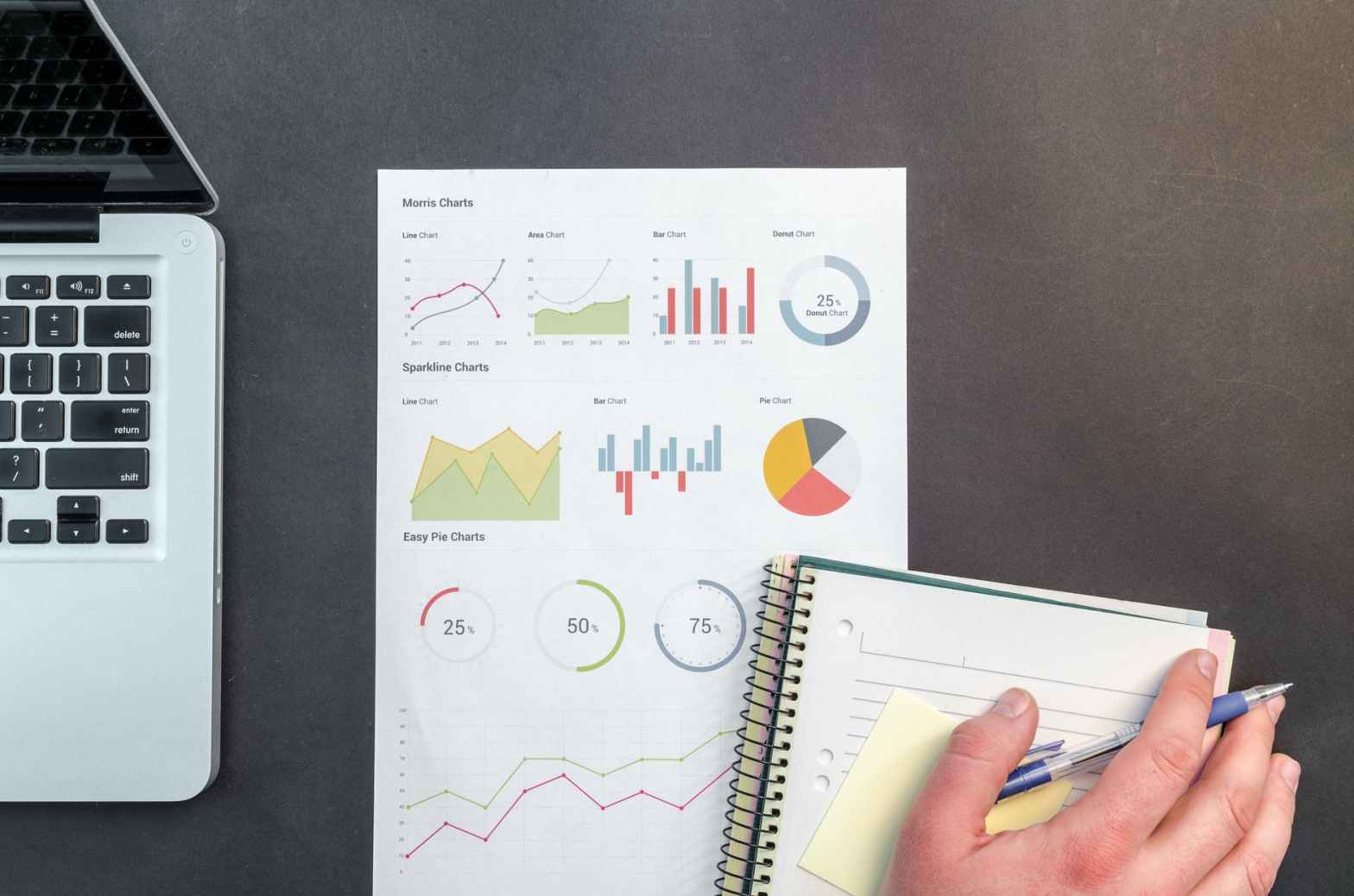
Data Analytics is a broad term referring to the use of data in order to arrive at informed decisions. Along with the increasing speed of mobile internet, artificial intelligence, and cloud technology, advanced data analytics is seen to be a game-changer in globalization (World Economic Forum, 2018).
In the 2020 EDUCAUSE Horizon Report for Teaching and Learning, one of the technological trends that will continue to impact teaching and learning is the use of data analytics technology to facilitate achievement of student outcomes. Data not only from learning management systems but also from student records (e.g., profile, academic history) and other institutionally managed data sources (e.g., sustainable development goals, institutional action plan and its alignment with the programs and learning outcomes) are seen as part of the analytics in order to ensure student success. The advancement of technology for data analytics will be a crucial part not only for the teachers’ but also the administrators’ courses of action adapting to the on-going learning experience of the students.
How is data analytics technology used in teaching and learning?
There are on-going projects using data analytics to meet student outcomes. These projects are reflective of what the 2019 EDUCAUSE Horizon Report referred to as a personalized and responsive learning strategy.
Alchemy, originally created to facilitate real-time guided learning to chemistry students at the University of British Columbia in 2013, is being continually developed to facilitate prompt and empirical support to students by matching their learning needs to the information and feedback provided by the instructors. Elements of Success (EoS) is developed by University of Iowa to provide timely feedback to students’ performance through data visualization.
ALEKS, an adaptive courseware used by Arizona State University, facilitated learning in general education courses. Based on the learning needs of the students assessed at the start of the course, a personalized learning preparation is suggested and it continually adapts to the progress of the student. An offshoot of this adaptive learning system is the idea of “stretch semester” where learners who need more time to finish the course may extend beyond the semester without being charged extra cost. I agree that in this case it is beneficial for students to extend; however, it is burdensome for instructors because they need to extend effort to facilitate the learner without proper remuneration. Hence, for an adaptive learning system to continue the learning experience without the instructor extending more time can be a win-win situation for both the learner and the instructor.
What are the implications of data analytics technology in my teaching and learning practice?
Implications to my teaching philosophy
Use of data analytics is consistent with my teaching philosophy on self-directed learning. Learning occurs both for the facilitator and the learner in a sense that the facilitator strives to learn ways on how to assist the learner in his/her learning needs and the learner also strives to learn ways to continuously improve. In short, data analytics promotes continuous improvement.
With the help of a supportive learning environment (virtual and/or physical), learning is directed to what is personally relevant to the learner. By giving the learner autonomy to navigate factual and conceptual knowledge (Anderson et al., 2001) through relevant materials, I can focus on higher cognitive processes like applying a concept appropriately and evaluating how such a concept sits in one’s personal and professional life along with its contextual factors.
Data analytics promotes continuous improvement.
Implications to my instructional strategies
There are already data analytics technologies that can be embedded in the learning management system (albeit expensive). For a start, I can create an online form where each student inputs their weekly learning success and needs for improvement so I can have an updated monitoring. In a research proposal class, for example, the learners may submit their complete proposal on a self-paced basis. The learner independently works on main sections like the introduction, literature review, conceptual framework, and methodology. Every week, each learner provides in the online form their progress and needs as they work on each section. With a glimpse of the weekly data, I can provide a visual presentation to students regarding their status in our course and I can also spot needs for improvement which helps me personalize coaching. Providing customized feedback to students has been found to motivate students to continually learn (Hubert, Chen, Tritz, & McKay, 2015; Van Horne et al., 2018).
Specifically, I can use data analytics to monitor the performance of learners on self-paced microlearning exercises like how to evaluate an article or paraphrase the main points of an article. With updated data of each learner’s performance, I can readily assess his/her progress in these microlearning experiences and target those areas which need scaffolding. In that monitoring form, learners can also put their questions which I will use to generate a set of weekly frequently asked questions and discuss in our online synchronous activity. Taking into account the number of learners in a class, individual monitoring through data analytics can be a daunting task but the use of online tools with data analytic and visualization capacities may make it manageable and time-efficient. With this, I will be able to adapt my instructional strategies and feedback to target the needs of a specific learner.
Finally, it is my responsibility as an educator to continually improve in response to the Zeitgeist. George Veletsianos, a Canada Research Chair in innovative learning and technology, pointed out in his reflection on the 2020 EDUCAUSE Horizon Report that even among institutions with established online learning practices, there is still a growing need to continue learning and development in terms of the combined roles of pedagogy and technology especially among practicing teachers, future teachers, and leaders in digital education. Hence, increasing knowledge and utilization of data analytics technology will continue to revolutionize how educators approach adaptive learning.
Batara, J. B. (2020, August). Data analytics for a customized response to individual learning needs. Available at https://flowjame.com/2020/08/26/data-analytics-in-education
References
Alexander, B., Ashford-Rowe, K., Barajas-Murphy, N., Dobbin, G., Knott, J., McCormack, M., Pomerantz, J., Seilhamer, R., & Weber, N. (2019). EDUCAUSE Horizon Report: 2019 Higher Education Edition. EDUCAUSE: Louisville, CO. Retrieved August 14, 2020 from https://library.educause.edu/resources/2019/4/2019-horizon-report
Anderson, L. W., Krathwohl, D. R., & Bloom, B. S. (2001). A taxonomy for learning, teaching, and assessing: A revision of Bloom’s taxonomy of educational objectives (Abridged ed.). New York: Longman.
Brown, M., McCormack, M., Reeves, J., Brooks, D. C., & Grajek, S., with Alexander, B., Bali, M., Bulger, S., Dark, S., Engelbert, N., Gannon, K., Gauthier, A., Gibson, D., Gibson, R., Lundin, B., Veletsianos, G., & Weber, N. (2020). 2020 EDUCAUSE Horizon Report: Teaching and Learning Edition. Louisville, CO: EDUCAUSE. Retrieved August 14, 2020 from https://library.educause.edu/resources/2020/3/2020-educause-horizon-report-teaching-and-learning-edition
Huberth, M., Chen, P., Tritz, J., & McKay, T. (2015). Computer-tailored student support in introductory physics. PLoS ONE, 10(9), e0137001. https://doi.org/10.1371/journal.pone.0137001
Van Horne, S., Curran, M., Smith, A., VanBuren, J., Zahrieh, D., Larsen, R., & Miller, R. (2018). Facilitating sudent success in introductory chemistry with feedback in an online platform. Technology, Knowledge and Learning, 23(1), 21-40. https://doi.org/10.1007/s10758-017-9341-0
World Economic Forum (2018, December). The future of jobs report 2018. Geneva: World Economic Forum. Retrieved August 15, 2020 from https://www.weforum.org/reports/the-future-of-jobs-report-2018
Acknowledgement: Heartfelt thanks to Elizabeth Remedio, PhD (Chair, Department of General Education, University of San Carlos) and Joey Dinopol (Teacher III, Ignacio Xavier A. Tuason Elementary School) for the comments and suggestions of the previous draft of this article.

 flowjame